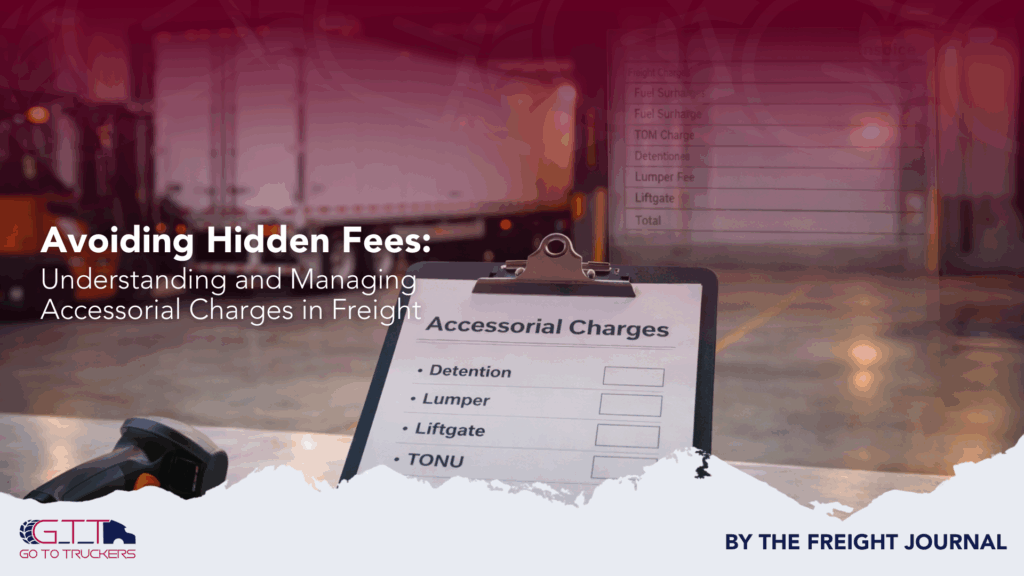
Freight rates rarely cover every service involved in moving goods. Accessorial charges are extra fees added beyond the base linehaul rate, and they can quickly impact transportation budgets, as outlined in this guide to accessorial charges in freight. These charges pay carriers for services or situations that fall outside a standard pickup or delivery, including scenarios covered in FleetWorks’ breakdown of accessorial fees. When teams understand these fees, they can budget more accurately and reduce surprises.
Common accessorial charges and their costs
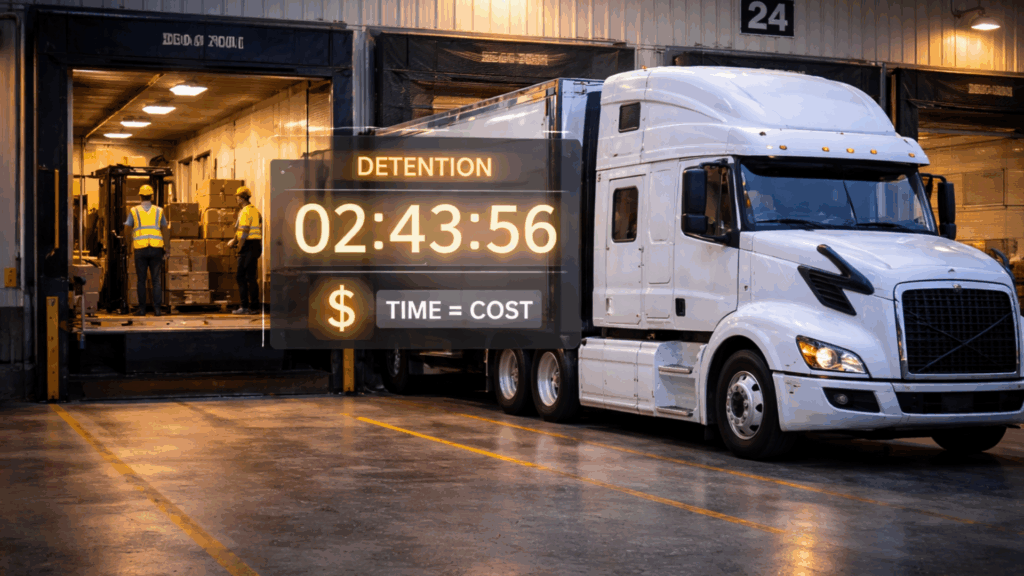
Detention and demurrage happen when a truck, trailer, or container is held past free time for loading or unloading. Detention often begins after 1–2 hours of free time, according to typical detention free-time standards. Most detention rates land between $50 and $100 per hour, based on common detention rate ranges. As a result, extended detention can add hundreds of dollars to a single shipment.
Lumper fees cover third-party labor used to load or unload freight. These fees often range from $100 to $500 per load, as noted in this overview of lumper fees. Liftgate charges apply when freight must be lowered to ground level. This is common when there is no dock or when freight is too heavy. Typical liftgate fees range from $50 to $150, as explained in liftgate accessorial pricing examples.
Other add-ons appear frequently. Residential delivery fees apply to non-commercial addresses (see residential delivery accessorials). Redelivery charges show up when a delivery attempt fails and must be repeated. Those usually fall between $100 and $300 (see redelivery fee ranges). Limited-access location fees are common for construction sites, schools, or secure facilities (see limited-access fees). Hazardous materials handling requires special certification and equipment, which increases cost (see hazmat handling accessorials).
Fuel surcharges are sometimes listed separately, but they still raise total cost. They change with national diesel prices (see how fuel surcharges are applied). In addition, carriers publish tariffs that define when each fee applies. These rules also list free-time allowances and minimums. Reviewing carrier tariff and accessorial rules before booking helps shippers plan ahead.
Strategies to manage and reduce accessorial charges
The most effective step is providing complete shipment information upfront. Accurate addresses, dock details, and handling requirements reduce surprises, as recommended in best practices for preventing accessorials. Consistent shippers also gain leverage in negotiations. For example, steady volume can support reduced detention rates, extended free time, or bundled services using volume-based accessorial negotiation tactics.
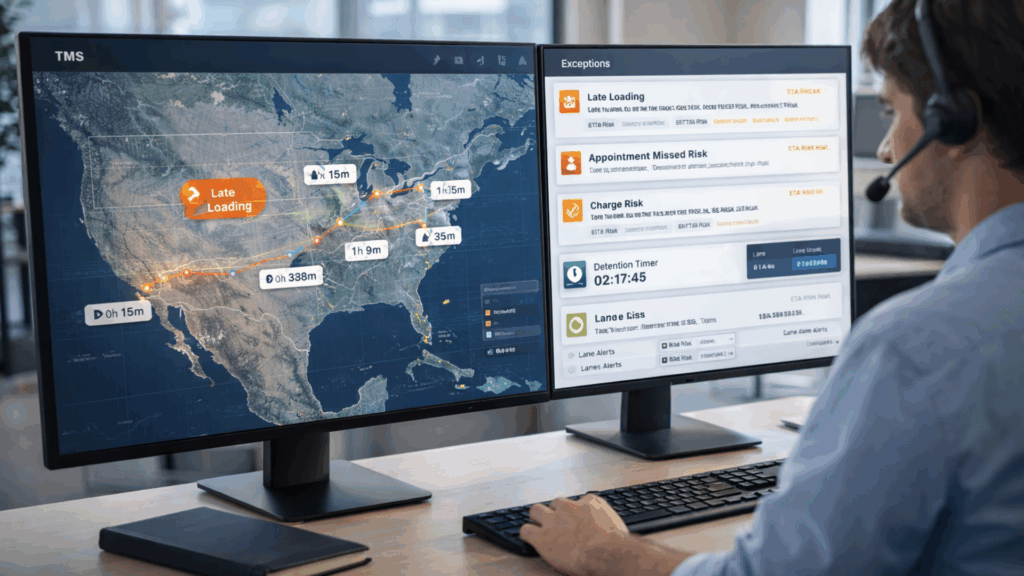
Facility process matters just as much. Better appointment scheduling and faster loading reduce dwell time. That directly lowers detention exposure (see ways to reduce detention exposure). Technology adds another layer of protection. Inbound Logistics recommends using transportation management systems to reduce transportation costs to flag risks early, such as missed appointments or late loading. That gives teams time to react before fees hit. Finally, automating freight audit processes helps catch billing errors and prevent duplicate payments.
So how do you turn these ideas into day-to-day execution without extra fees showing up later? That’s where the right logistics partner comes in—because avoiding accessorials isn’t just about knowing the rules, it’s about applying them consistently before pickup, during transit, and at delivery. And this is where we enter the picture.
How Go To Truckers keeps costs in check
Go To Truckers helps clients avoid hidden fees through transparent quotes and proactive communication. Our account managers confirm facility requirements and cargo details early, so pricing is accurate. We also optimize pickup and delivery schedules to reduce detention risk. On high-volume lanes, we negotiate extended free time or bundled accessorial rates with carriers.
Our transportation management platform generates alerts for risk signals, such as late loading or missed appointments. That allows us to intervene before charges accrue. The result: fewer surprises, fewer disputes, and more predictable freight spend—so your team can focus on moving product, not chasing invoices.
No Comments yet!