The supply chain landscape is a complex tapestry woven with threads of varying lengths, and at its heart lies a critical partnership: the one between freight brokers and carriers. For logistics managers navigating this environment, understanding and optimizing this relationship is paramount to achieving efficiency, reliability, and cost-effectiveness. A modern, well-utilized Transportation Management System (TMS) is not just a tool for tracking shipments; it is the central nervous system that can profoundly enhance this crucial broker-carrier collaboration. A strong TMS turns broker-carrier collaboration into a more visible, faster, and more accountable process.
The Indispensable Role of the Freight Broker
Before diving into the technology, it is essential to acknowledge the importance of Go To Truckers’ freight brokers in the contemporary market. They are far more than just middlemen; they are market makers, risk mitigators, and crucial capacity aggregators.
Freight brokers possess a deep, real-time understanding of fluctuating market conditions, which allows them to quickly source appropriate capacity. This is a task that would consume valuable time and resources for a shipper’s logistics team, so Go To Truckers’ freight brokers also act as a critical buffer, shielding shippers from the volatility of carrier availability and rate changes. Furthermore, they are often responsible for vetting carriers, managing compliance, and ensuring insurance requirements are met, thus de-risking the transportation process for logistics managers. In short, the freight broker is an indispensable piece of the logistics puzzle, key to ensuring product flow and supply chain resilience.
TMS as the Hub for Collaborative Excellence
For logistics managers, the goal should be to transform the transactional relationship into a strategic partnership. This is where a TMS, especially one with strong integration capabilities, becomes a game-changer.
1. Unified, Real-Time Visibility
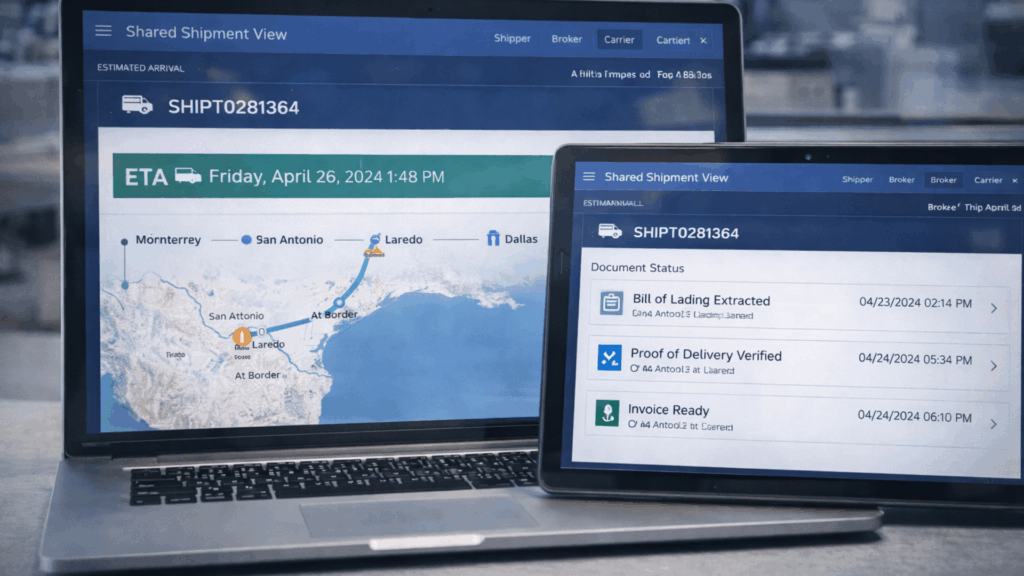
The foundation of trust and collaboration is shared information. A TMS allows logistics managers, Go To Truckers’ freight brokers, and their selected carriers to operate from a single source of truth.
| Feature | Impact on Collaboration |
| Centralized Order Management | Reduces errors and ensures all parties view the same load details, rates, and requirements. |
| Automated Status Updates | Replaces manual check calls, allowing brokers and managers to see a truck’s location and progress instantly. |
| Digital Document Management | Go To Truckers’ freight brokers can quickly upload crucial documents like Bills of Lading (BOL) and proof of delivery (POD) directly into the system for immediate access by the logistics manager. |
This real-time visibility significantly reduces communication friction, allowing Go To Truckers’ brokers to proactively manage exceptions and update managers without constant prompting.
2. Streamlined Digital Workflows
Manual processes are bottlenecks that erode efficiency. By leveraging the TMS, logistics managers can integrate the broker’s workflow directly into their own.
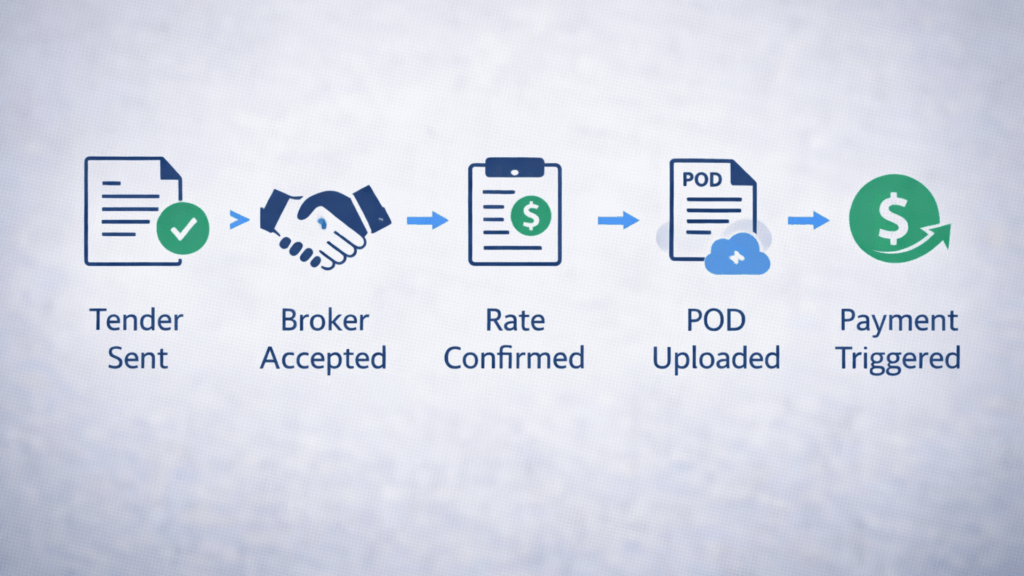
- Tendering and Acceptance: Instead of relying on phone calls and emails, load tenders are sent digitally through the TMS. Go To Truckers’ brokers accept or decline loads instantly, and the system records the response, creating an auditable trail.
- Rate Confirmation: Standardized digital rate confirmation forms ensure clarity and eliminate disputes. This transparency allows the logistics manager to verify competitive pricing and service agreements instantly.
- Automated Payments: Many advanced TMS platforms integrate with carrier payment systems. Once a broker provides the required delivery confirmation through the TMS, the system can trigger a faster payment process. This financial efficiency is a huge incentive for carriers and reinforces the broker’s reputation as a reliable business partner.
3. Data-Driven Performance Management
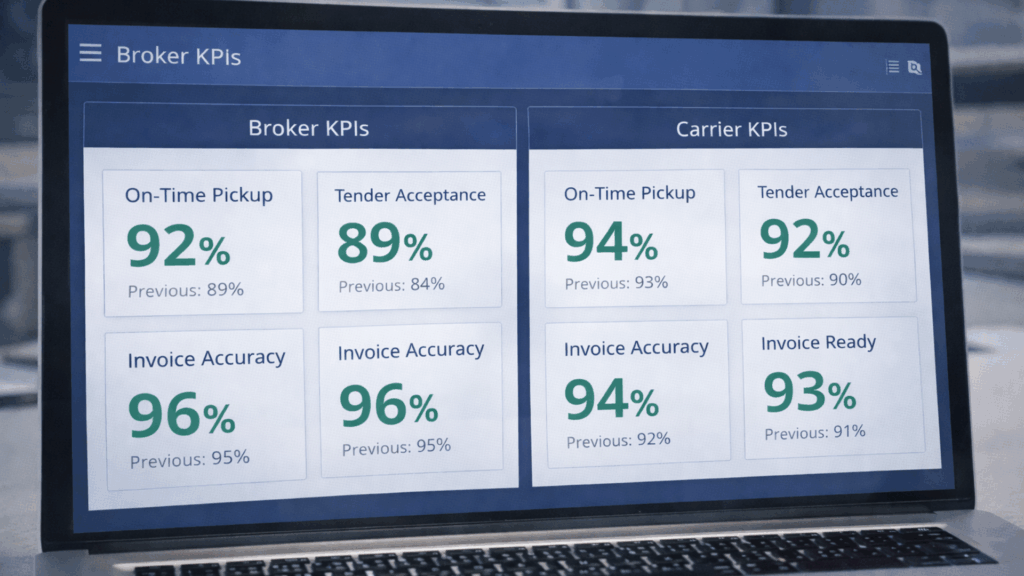
A TMS provides the objective data necessary to evaluate the collaborative partnership effectively. Logistics managers can track key performance indicators (KPIs) not just for carriers, but for brokers as well.
Metrics such as on-time pickup and delivery percentages, tender acceptance rates, and invoice accuracy can be generated automatically. This data provides an objective basis for quarterly business reviews (QBRs), allowing the logistics manager to recognize high-performing brokers and collaboratively address areas of improvement with others.
In closing
Go To Truckers’ brokers are a vital extension of a logistics manager’s team. By strategically implementing a robust TMS, logistics managers can transform their broker-carrier interactions into a seamless, highly integrated, and data-driven partnership. This technological leverage ensures that the entire supply chain moves with greater velocity, reliability, and precision, ultimately driving enhanced customer satisfaction and a stronger bottom line. Logistics managers should prioritize a TMS implementation that explicitly supports Go To Truckers’ broker integration and collaborative workflows to secure a competitive edge in today’s demanding market. For logistics managers, better broker-carrier collaboration means fewer delays, clearer communication, and stronger carrier relationships.
No Comments yet!